
App Server prototype 5
 DigitalBox
- Tips
- August 24, 2026
If you have ever wondered what the Haiku app_server looked like before it was the Haiku app_server, there is a small, dusty answer sitting in the OpenBeOS archives called "proto5" from April 2002.
About a 10 000 lines of C++ with a companion test app.
I unpacked it on my NUC trying to compile it and this is what I found.
Prototype 5
Back in 2002 the OpenBeOS project was iterating fast on a replacement for the closed-source BeOS "app_server". Proto5 is exactly what the name says: the fifth prototype.
It is not the finished app_server that ships with Haiku today, and it was never meant to be — but it is a complete-enough snapshot of the design that would grow into it.
A first look inside
The entry point is not main.cpp — that file is a lovely one-line joke, and as it turns out, not even part of the actual build:
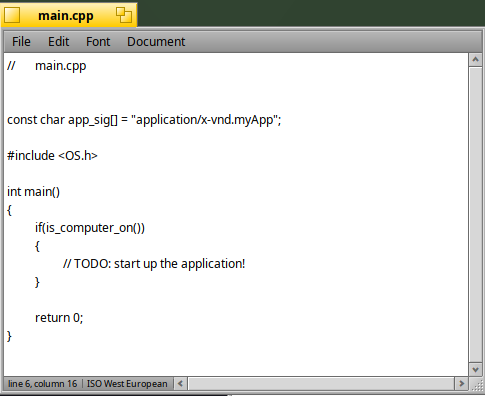
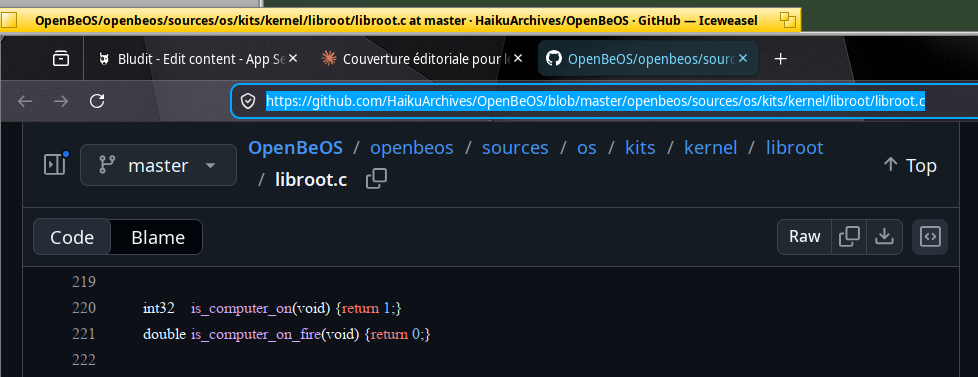
is_computer_on() is a real BeOS API call that always returns 1
It's available here:
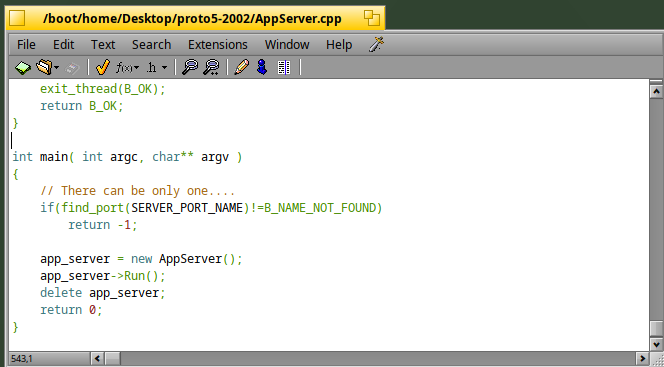
The real main() lives at the bottom of AppServer.cpp, next to the polite "// There can be only one...." guard.
From there the shape is familiar.
AppServer is a BApplication that spawns two housekeeping threads: Poller, which reads mouse events from an OS port, and Picasso, which pings every connected app every two seconds to see if it is still alive.
Each connecting application gets its own ServerApp monitor thread; each window gets a ServerWindow; each window sits on a Layer tree; each layer is drawn through a pluggable DisplayDriver.
Window decorators are separate objects, loaded — in theory — as add-ons.
What actually works
Rather a lot, given the age.
Applications talk to the server through PortLink, a clean little messaging protocol, and it already handles most of what you'd expect: creating windows, drawing shapes, moving the cursor.
Windows can be dragged around by their title bar, and bringing a window to the front works too.
There's even a whole debug mode, ViewDriver, that renders the entire app_server inside a normal BeOS window — so the authors could hack on it without having to boot into an unfinished machine.
A companion driver targets real graphics hardware, and a small test client lets you spawn a window against the running server.
What doesn't
Then the cracks start to show. Window resizing, for instance, was clearly planned — the code has hooks for it — but it was never actually finished, so dragging a window's edge does nothing.
The decorator plugin system has a small copy-paste bug that quietly breaks it: it always falls back to the default window decorator instead of loading a custom one. The architecture for swappable decorators is there; it just never actually works.
The same pattern shows up elsewhere. Many of the drawing functions are declared but left empty. There's no font rendering, the keyboard isn't handled yet, clipping isn't enforced, and switching between workspaces is only a stub.
Proto5 got the architecture right — the details would come with time.
Traces of the people
The most interesting part of this code is the human residue.
Three contributors are visibly present.
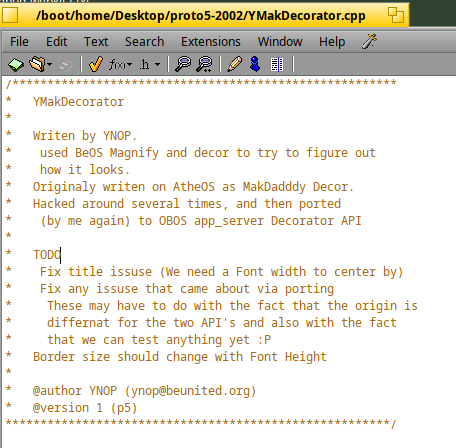
YNOP (ynop@beunited.org) signs SecondDriver and YMakDecorator; the latter carries a header explaining it was "Writen by YNOP… Originaly writen on AtheOS as MakDadddy Decor. Hacked around several times, and then ported (by me again) to OBOS app_server Decorator API."
Elsewhere, a contributor named dreid pokes fun at a colleague's mistake with an in-joke error message in Desktop.cpp:172: printf("DW goofed on the workspace index :P\n") — quite possibly a third contributor who was documenting proto5 with screenshots around this same time.
The comment next to Picasso's exit condition reads, in full: "if poller thread has to exit, so do we — I just was too lazy to rename the variable name. ;)". The SecondDriver's TODO list ends with "Look into FreeType for DrawString :P fun fun fun".
Most of this wouldn't survive a modern code review, and that's exactly what makes it feel alive.
Building it today
The original build system is long gone, but a small Makefile for a current Haiku install is enough because Haiku still ships with the BeOS R5-compatible headers.
Download the fixed archive here and extract it.
Go to the extracted folder and type make:
make
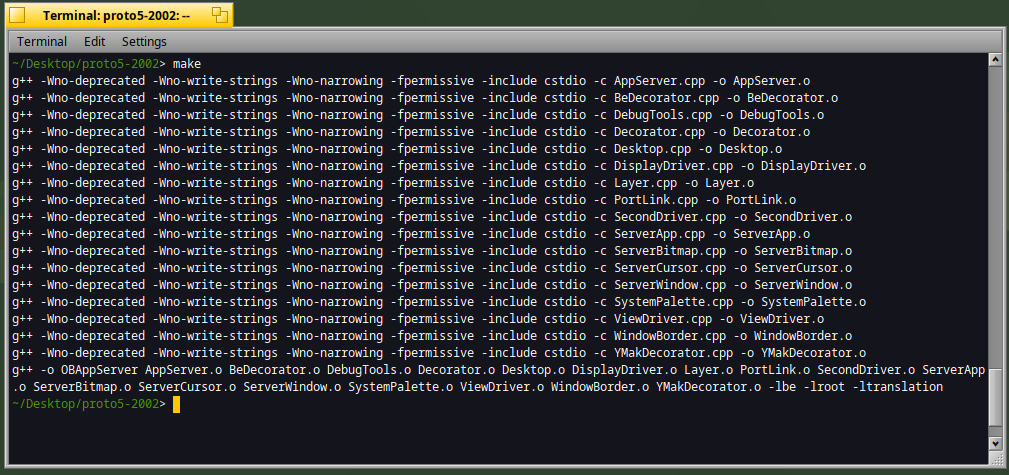
Apply the same for the test client:
cd testOBApp
make
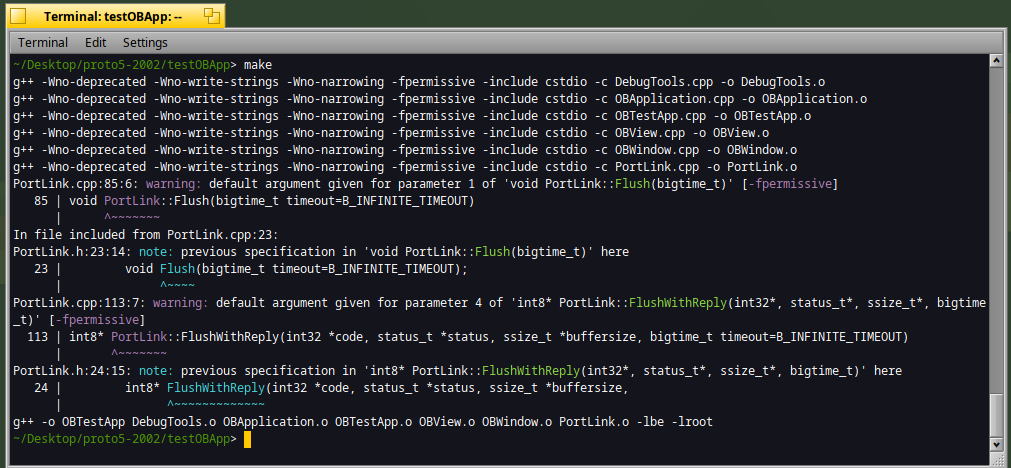
You end up with an OBAppServer binary and from testOBApp folder the OBTestApp client that will open a window on it.
Launch the OpenBeos app server:
./OBAppServer
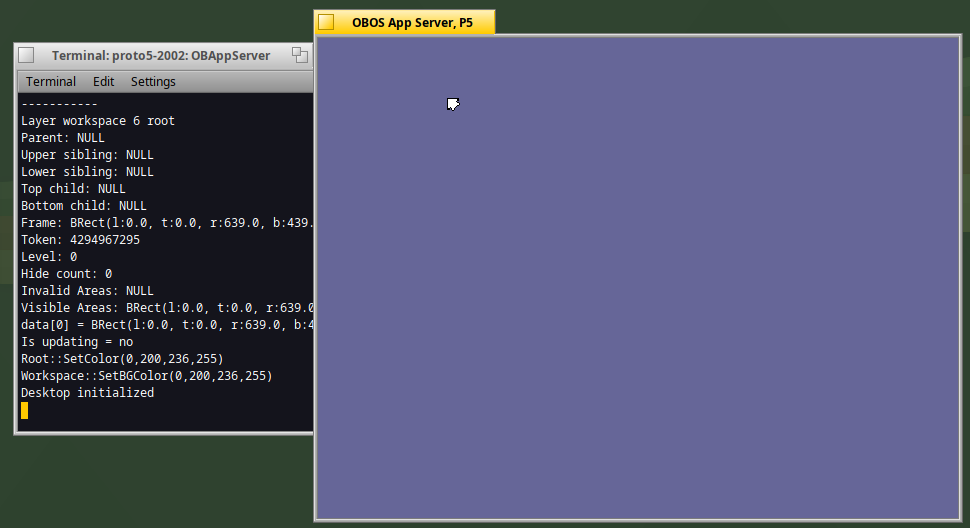
A screen is displayed with a mouse cursor.
Then run the client:
cd testOBApp
./OBTestApp
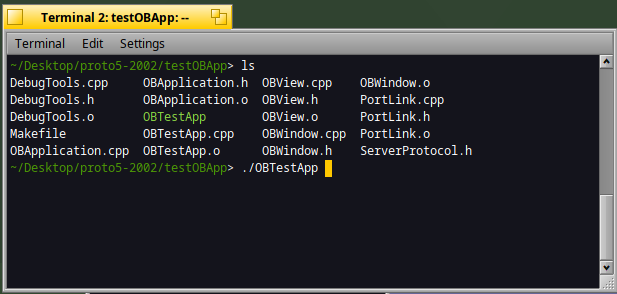
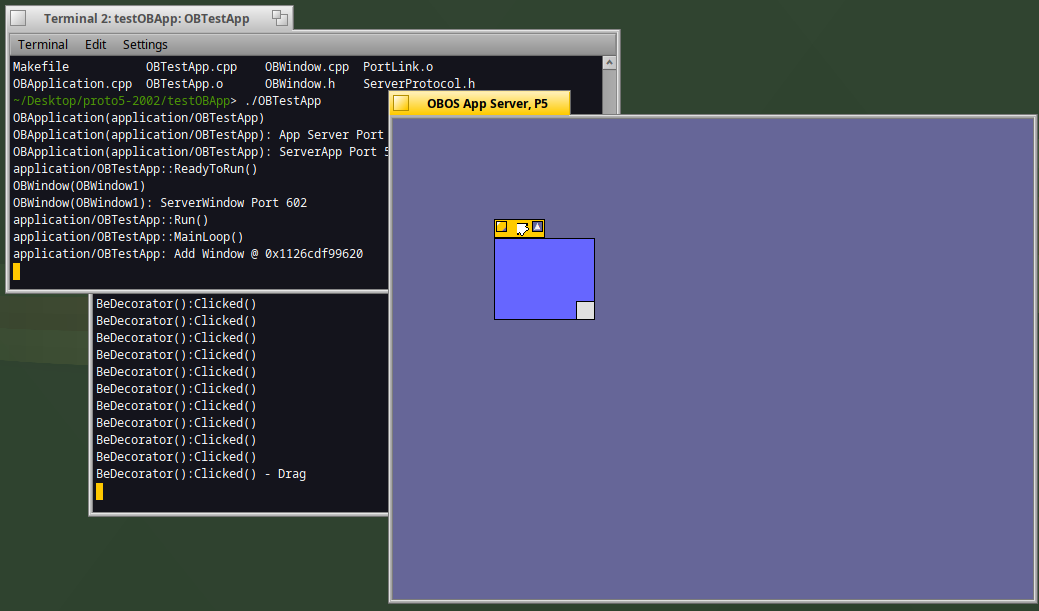
You should see a window created in the App Server as below:
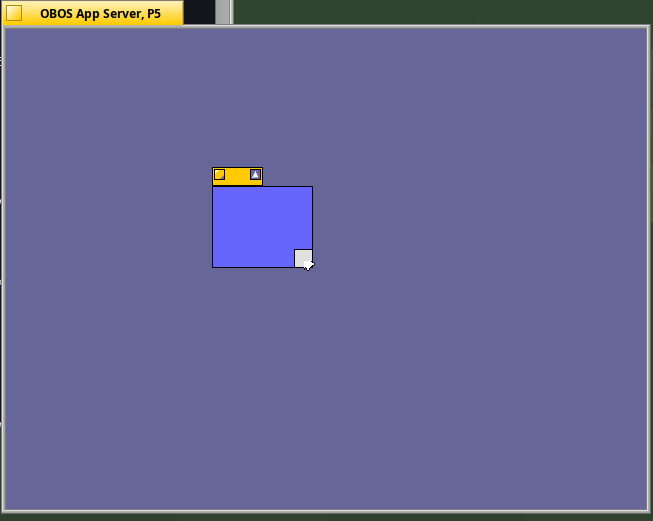
You can move the window but not resize it:
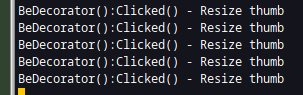
Some debug information are visible in the Terminal:
Closing the OBAppServer window will close both server and client:
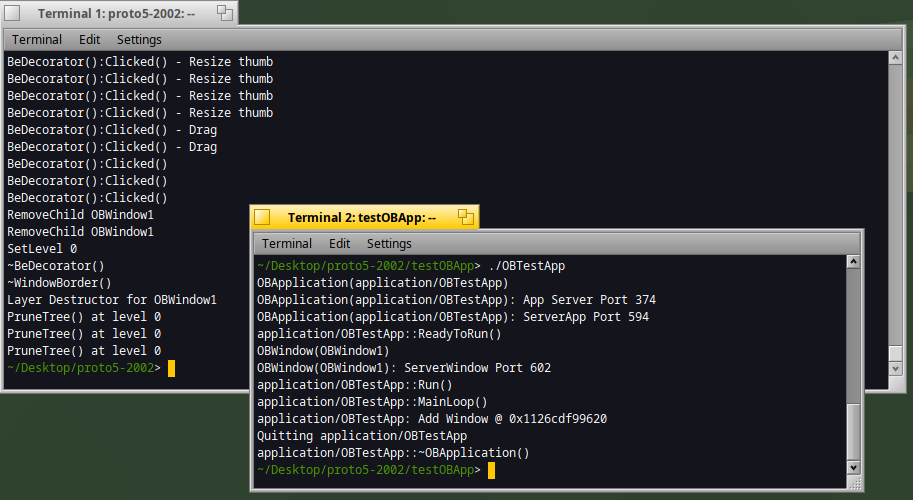
Because the Desktop hard-codes the ViewDriver, the whole thing runs inside a regular Haiku window — a 2002 app_server, running on top of the 2026 app_server it eventually inspired.
Conclusion
Proto5 is not really software you use, it is software you read.
It is small app and a full of little windows into the people who wrote it.
If you have ever poked at the Haiku app_server sources and wondered where it all came from, this is a very direct answer:)